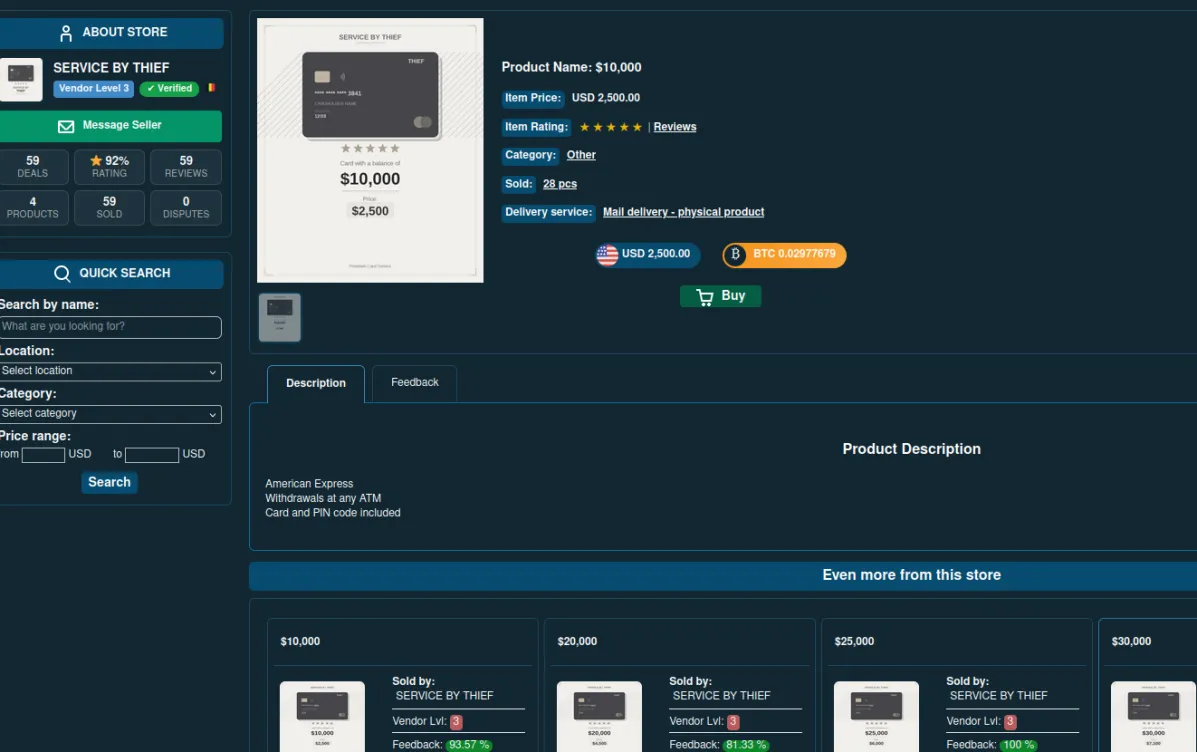
The dark web, a hidden segment of the internet accessible only through specialized software like Tor, hosts a variety of activities, some legitimate and many illicit. Among the most persistent forms of cybercrime found within these encrypted networks is carding. This practice involves the trade and utilization of stolen financial information, often facilitated through dark web onion links that offer a semblance of anonymity to buyers and sellers alike. The allure of quick profits often overshadows the inherent risks, as demonstrated by numerous cases where the perceived anonymity of the dark web fails to protect individuals from real-world consequences. This narrative explores the operational mechanics of carding, dissects the vulnerabilities that perpetrators often overlook, and highlights the sophisticated investigative methods employed by law enforcement.
For a deeper dive into the technological aspects and security measures, consider visiting our resource on credit card skimming protection.
The Anatomy of Carding: A Chain of Illicit Transactions
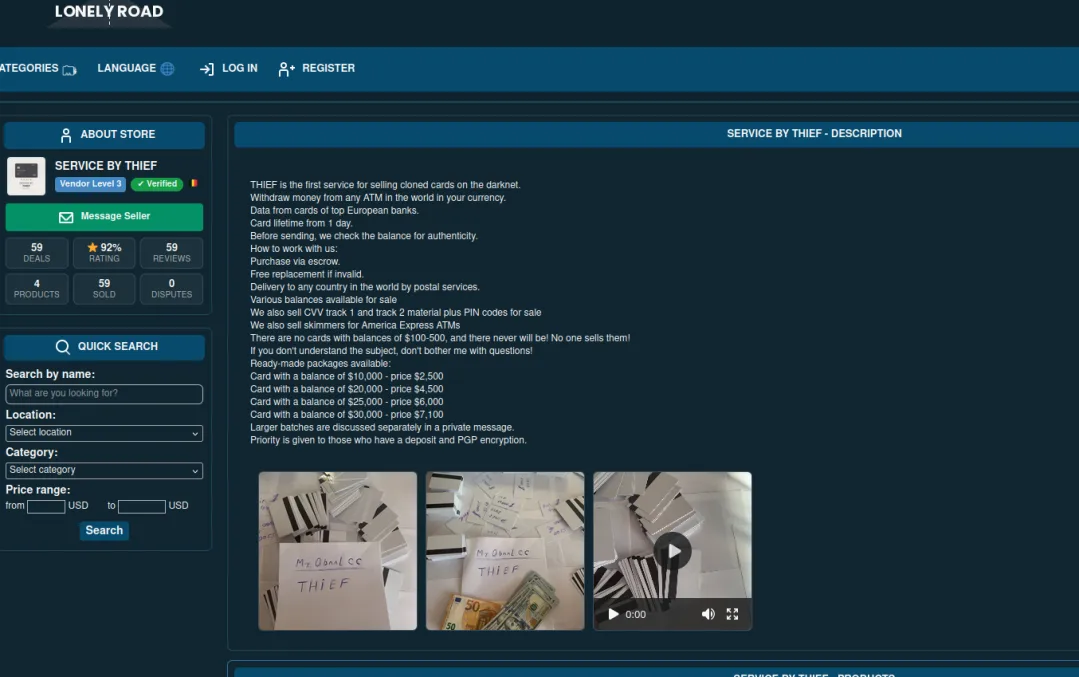
Carding, the illicit trade and use of stolen banking data, has long been a foundational element of cybercrime. This criminal activity, despite its longevity, continues to adapt and persist. The process typically begins with the acquisition of sensitive financial data. This initial step frequently involves various methods of data compromise, such as skimming or large-scale data breaches, where criminals gather magnetic card tracks (specifically track 1 and track 2 data). These data points are often obtained through physical devices like skimmers attached to ATMs or point-of-sale terminals, or through more sophisticated shimmer devices that target EMV chip cards. Phishing campaigns, designed to trick individuals into divulging their banking details, also contribute significantly to this data pool. Additionally, a substantial portion of this stolen data is directly purchased from other illicit actors on darknet markets.
Once the raw data is obtained, the next phase involves embossing. This is the process where the stolen information is transferred onto blank plastic cards. The goal here is to create a card that visually resembles a legitimate financial instrument, complete with an embossed name, an expiration date, and a card number. The meticulous nature of this step aims to bypass visual inspections, making the cloned card appear authentic. A critical component in the carding scheme is the PIN code. If the PIN was compromised alongside the card data – often through an overlay keypad or a hidden camera strategically placed on an ATM – the buyer receives a ready-to-use tool for immediate cash withdrawal. This significantly increases the value and utility of the cloned card.
The penultimate stage involves the cash-out. This is where the individual using the cloned card withdraws money from an ATM. The primary objective is to execute these withdrawals swiftly, ideally before the legitimate cardholder detects the unauthorized activity and blocks their card. The speed of this action is paramount to the success of the scheme. Finally, the illicitly obtained cash undergoes a laundering process. This often involves converting the physical cash into cryptocurrency, typically through Bitcoin ATMs or peer-to-peer (P2P) exchanges. This conversion is a deliberate attempt to obscure the financial trail, making it more challenging for law enforcement to trace the funds back to their origin. The use of cryptocurrencies like Monero, which are specifically designed for enhanced privacy, further complicates tracing efforts. However, as experience shows, even these measures do not guarantee absolute anonymity.
The Overlooked Vulnerability: ATM Surveillance
Many individuals engaged in carding operations, particularly those involved in the cash-out phase, often underestimate the sophistication of modern ATM security. An ATM is not merely a dispenser of cash; it functions as a comprehensive surveillance and data collection device. Inside almost every contemporary ATM, a robust array of monitoring and recording equipment is meticulously installed. This integrated system is designed to capture a wide range of data points and physical evidence, significantly undermining the perceived anonymity of carding activities.
Primarily, ATMs are equipped with built-in cameras. These cameras are typically positioned to capture the client's face, often recording at high resolutions, such as 1080p. Many of these cameras also feature infrared illumination, which ensures clear footage even in low-light or nighttime conditions. In addition to the primary camera, many ATM models incorporate a second, hidden camera. This secondary camera is often installed at a different angle and is not visible from the exterior, providing an additional layer of surveillance. The footage from these cameras can be instrumental in identifying individuals involved in illicit transactions.
Beyond visual surveillance, ATMs maintain a detailed transaction log. Every single withdrawal is meticulously recorded with precise timestamps, often accurate to the second. This log includes critical information such as the exact time of the transaction, the amount withdrawn, the card number used, and the specific ATM identification number, along with the transaction status. Furthermore, ATMs are equipped with geolocation capabilities, meaning they accurately know and transmit their coordinates to the bank's central logging system. This provides investigators with precise location data for every transaction. Finally, a network log captures all requests sent to the bank's processor, including valuable connection metadata. These combined data streams create a formidable evidence collection system, transforming what appears to be a simple cash machine into a powerful tool for forensic investigation. This extensive data collection ensures that digital crime, when it intersects with the physical world at an ATM, leaves a substantial and traceable footprint, often leading to the swift identification of perpetrators. A credit card skimming device detector can identify some of these threats, but sophisticated skimmers are hard to detect.
Investigative Pathways: Tracing Digital Footprints to Physical Arrests
The path from an illicit transaction on the dark web to a federal prison sentence often begins with the immediate consequences of the fraud itself. The investigation into carding operations frequently starts with the victims. Victims typically notice unauthorized withdrawals from their accounts and promptly file complaints with their respective banks. These reports are crucial, as banks immediately block the compromised cards and feed the data into sophisticated early fraud warning systems. These systems are designed to identify suspicious activity quickly, often within days. For instance, anti-fraud algorithms within the banking system can identify patterns, such as multiple withdrawals from the same group of cloned cards across different states within a short timeframe. Such patterns automatically trigger an emergency flag, escalating the case to the bank's dedicated investigation department.
Once a case is flagged, it is often transferred to specialized law enforcement agencies. The U.S. Secret Service (USSS), for example, holds jurisdiction over financial crimes and frequently takes on such cases. USSS analysts then request comprehensive logs from all involved ATMs, alongside crucial video recordings. The visual evidence from ATM cameras plays a pivotal role in identifying suspects. Clear images of perpetrators, often captured without any disguise, can be cross-referenced with public safety databases, such as driver's license records, to identify individuals. This process allows investigators to match a face to an identity, even if the individual has no prior criminal record.
Further investigation involves obtaining warrants for electronic traces. These warrants allow investigators to access browser history, Internet Service Provider (ISP) records, and cryptocurrency wallet activity. Analysis of ISP data can reveal visits to Tor exit nodes during periods corresponding to illicit purchases, linking individuals to darknet activities. Crucially, even privacy-focused cryptocurrencies like Monero do not guarantee anonymity if the initial purchase involves a centralized exchange with Know Your Customer (KYC) verification. A court order can compel such exchanges to provide identity and transaction history, establishing a clear link between a user and their dark web purchases. The accumulation of both digital and physical evidence — ranging from ATM video to seized physical cards, card cloning devices like a magnetic stripe read/write device (MSR), and computers with darknet browsing history — forms an irrefutable body of evidence, leading to arrests and subsequent convictions. This intricate process underscores how various pieces of evidence, seemingly disparate, converge to build a robust case against perpetrators.
Common Errors in Carding Operations
Individuals involved in carding often make several critical mistakes that ultimately lead to their identification and capture. These errors, often stemming from a false sense of security or a lack of understanding of investigative techniques, consistently undermine their attempts at anonymity. One frequent oversight is concentrating withdrawals within a limited geographic radius. When multiple withdrawals from cloned cards occur within a short distance of a perpetrator's home, anti-fraud systems are immediately alerted to such patterns. This geographic clustering significantly narrows down the search area for investigators.
Another pervasive error is the failure to use effective disguise. Approaching ATMs without a mask, glasses, or a hat allows built-in cameras to capture clear facial images. These images are then easily matched against driver's license databases, providing a direct route to identification. The belief that the anonymity of the dark web extends to physical actions at an ATM is a dangerous misconception. For those wondering how to tell if a card reader has a skimmer or how to tell if there is a card skimmer, visual checks for loose parts or unusual attachments can sometimes provide clues, but perpetrators often use sophisticated, undetectable devices.
Furthermore, the purchase of privacy-centric cryptocurrencies through centralized exchanges that require Know Your Customer (KYC) verification represents a significant vulnerability. While cryptocurrencies like Monero are designed for anonymity, the initial link between a verified identity and the purchase of that cryptocurrency can be exposed through a court order. This provides a direct connection between an individual and their dark web transactions. Additionally, many perpetrators make the mistake of storing incriminating evidence at home. Seized items often include blank cards, magnetic stripe read/write devices (MSRs), and laptops containing browsing history of darknet marketplaces. Even if attempts are made to delete data, digital forensics can often recover traces of Tor Browser usage or operating system updates, which can indicate darknet activity. Card skimming protection and a credit card skimmer protector are crucial for consumers, but criminals bypass these with evolving methods.
Finally, the presence of cash at home, particularly in denominations matching those dispensed by ATMs during fraudulent withdrawals, further strengthens the prosecution's case. While seemingly a minor detail, it adds to the cumulative evidence. The speed at which these operations are conducted also plays a role; rapid, consecutive withdrawals within a short period trigger anti-fraud systems more quickly than if transactions were spread out over months. While spreading out transactions might delay detection, the persistent threat of ATM cameras means that identification remains a high probability. Forums like 'carding forums dark web' and discussions on 'cloned cards reddit' sometimes discuss these operational security failures, but often the advice is disregarded.
Lessons for Cybersecurity Professionals and the Public
The detailed breakdown of carding cases, such as the one involving Mark T., offers crucial insights for cybersecurity professionals and the general public. These cases are not merely narratives of individual criminal acts but illustrate the robust and evolving nature of security systems designed to combat financial fraud. One significant takeaway is the effectiveness of anti-fraud systems on the banking side. These systems, powered by advanced algorithms, perform as the primary and often underestimated line of defense. They utilize pattern analysis, geolocation rules, and sophisticated scoring models to detect anomalies automatically, frequently before any human intervention is required. This highlights the ongoing necessity for financial institutions to invest continually in machine learning models for anomaly detection, as these automated systems are critical in identifying and flagging fraudulent activities quickly. For instance, the prompt detection of multiple withdrawals across states from a single group of cloned cards exemplifies the power of these systems.
Another vital lesson is the symbiotic relationship between physical and digital forensics in successful investigations. The key piece of evidence, such as ATM video footage, is inherently a physical medium. However, without the corresponding digital transaction logs—which pinpoint the exact time and location of a fraudulent withdrawal—this video evidence would be largely ineffective. The ability to integrate these two distinct worlds of evidence is fundamental to conducting a comprehensive and successful investigation. This combined approach ensures that both the 'who' (from video) and the 'when' and 'where' (from digital logs) are established, creating an irrefutable chain of evidence. For consumers, understanding how to check for credit card skimmers, by looking for anything unusual on card readers or PIN pads, is a basic but important defense. Credit card skimmer protection is not just about technology; it's about vigilance.
Furthermore, the illusion of anonymity provided by certain cryptocurrencies is frequently shattered at crucial points. While 'anonymous' cryptocurrencies like Monero are designed to obscure transactions, the entry point (buying cryptocurrency on a KYC-verified exchange) and the exit point (converting cash back to fiat currency) often serve as critical weak links. As long as KYC regulations are in place for centralized exchanges, complete anonymity for financial transactions remains an elusive goal. These regulatory requirements provide law enforcement with legal avenues to trace digital assets back to real-world identities, even if subsequent transactions on the blockchain are difficult to track. This means that any individual engaging in illicit activities and attempting to use cryptocurrency for payment must confront the reality that their identity can be exposed at either end of the transaction chain. Even with advanced credit card skimming protection, the human element remains critical.
Finally, customer education continues to be a persistent weak link in the overall security chain. In many fraud cases, victims do not immediately notice or report the unauthorized transactions. The faster a victim reports a theft, the quicker banks can block compromised cards, thereby minimizing the financial damage incurred by both the customer and the institution. Banks and financial service providers have a continuous responsibility to educate their clients on how to recognize and report suspicious activity promptly. This educational work directly contributes to reducing the overall impact and success rate of fraudulent schemes. Consumers should be aware of 'card skimming reddit' discussions and 'atm skimmer images' to recognize potential threats.
The Irreversible Consequences of Carding
The case of Mark T. serves as a stark illustration of the severe repercussions faced by those involved in carding, particularly the 'cash-out' operators who act as the final link in the criminal chain. While Mark was not the architect of the scheme, his active participation in withdrawing funds from ATMs directly exposed him to the full force of the law. His plea of guilty to charges of fraud and money laundering culminated in a substantial federal prison sentence, accompanied by significant fines and restitution payments. This outcome underscores a critical reality: the physical act of engaging with an ATM transforms digital crime into a tangible offense, dissolving the perceived anonymity of the dark web.
The judge's remarks during sentencing highlighted that while the organizers of such schemes often remain in the shadows, it is the individuals at the point of physical transaction who bear the immediate and most severe legal consequences. This disparity presents an ongoing challenge for law enforcement agencies, who continually strive to dismantle the higher echelons of these criminal networks. However, Mark's case unequivocally demonstrates that the risks associated with carding are profoundly real for all participants. The combination of advanced banking anti-fraud systems, ubiquitous surveillance technologies, and sophisticated digital forensics creates a formidable barrier against such illicit activities, making the pursuit of quick, illicit money a path fraught with significant legal peril.
Questions readers ask
- What is carding?
Carding is the illicit practice of using stolen banking data, often obtained through skimming or data breaches, to create cloned cards for fraudulent cash withdrawals or purchases.
- How are ATM cameras used in investigations?
ATM cameras record high-resolution footage of individuals during transactions. This footage, combined with transaction logs and geolocation data, allows law enforcement to identify suspects by cross-referencing facial images with public databases like driver's licenses.
- Can anonymous cryptocurrencies like Monero protect carders?
While cryptocurrencies like Monero offer enhanced privacy, their anonymity is often compromised at the points of purchase or conversion (cash-out). Centralized exchanges requiring KYC verification can link an individual's identity to their crypto transactions through court orders.
- What are common mistakes made by carders?
Common mistakes include performing withdrawals in a limited geographic area, failing to use effective disguise at ATMs, purchasing cryptocurrencies on KYC-verified exchanges, and storing incriminating physical and digital evidence at home.
Further services. These services are useful starting points for further research. Directory